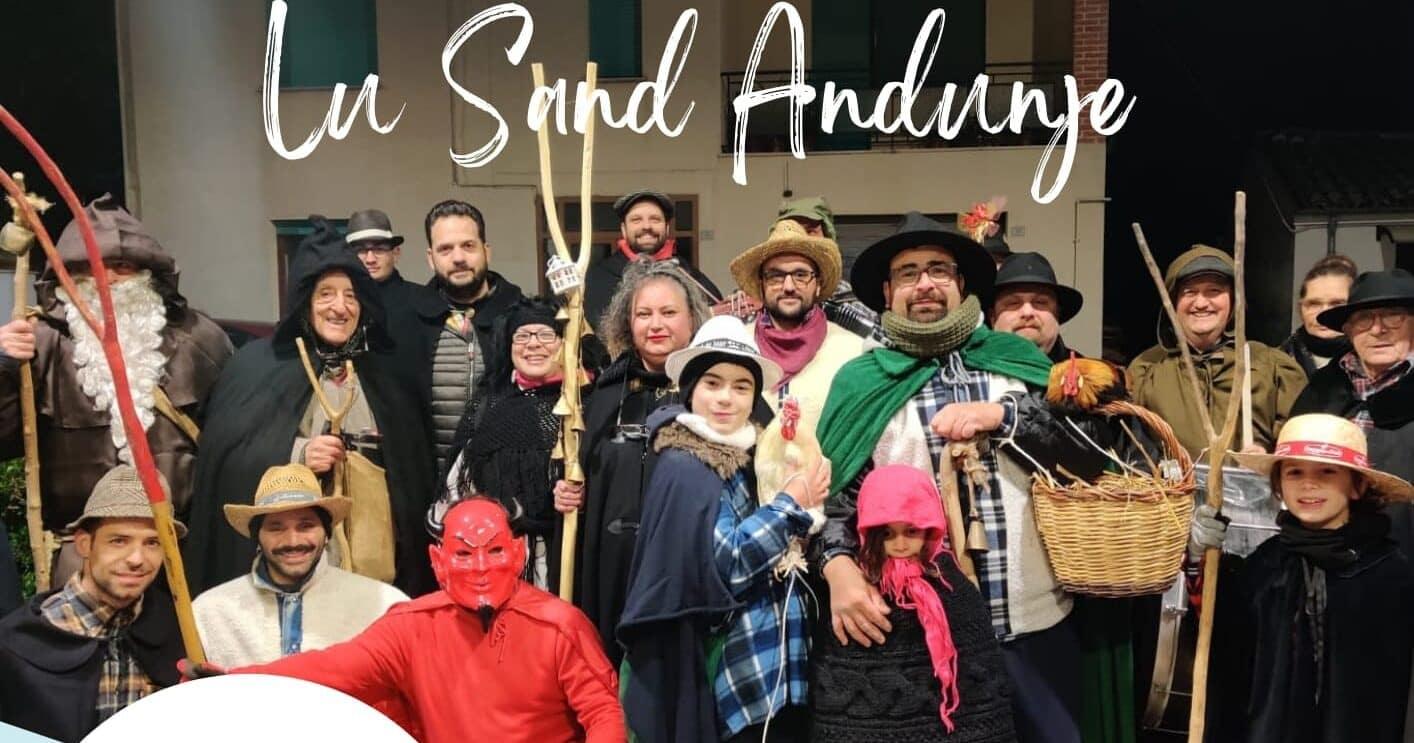
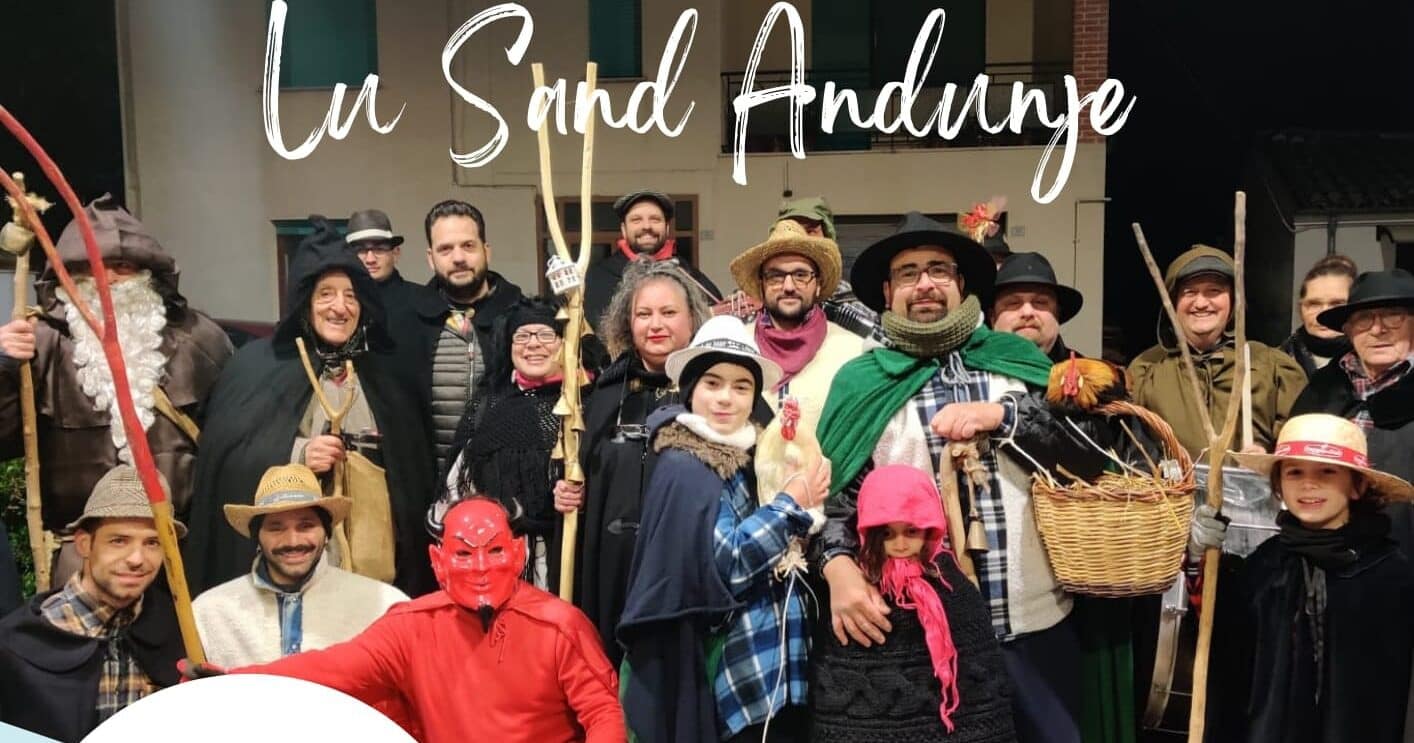
Every January 17, when the Abruzzo winter bites hardest, the square on Via Croce di Mare fills with a crowd that seems to have stepped out of another era. At five in the afternoon, the “Lu Sand Andunje” parade begins, a popular reenactment of Saint Anthony the Abbot organized by the Municipality of Torino di Sangro in collaboration with the Pro Loco. It is one of those traditions where, upon closer inspection, it is never clear where the sacred ends and the town festival begins—and that is precisely the point.
First and foremost, a song
"Lu Sand Andunje" is first and foremost a song. It is sung throughout the agricultural and pastoral regions of Abruzzo on the eve of January 17, the feast day of the Egyptian saint whom peasant tradition has chosen as the patron of domestic animals, stallions, pigs, and the farmers themselves. It is the song of the alms-round: groups of musicians and singers who, for five or six days, go from farmhouse to farmhouse collecting sausages, cheeses, eggs, and chickens, in exchange for propitiatory blessings.
In Torino di Sangro, this rural heritage has been transformed into an urban parade that winds through the town, serving the same purpose: to bring joy, tradition, and—implicitly—that sense of community that rural societies were better at fostering than ours. Today, people don’t go from farmhouse to farmhouse asking for sausages: they make their way through the town center, sing, put on a bit of a show, and end up at the table.
The Temptations of the Saint
The heart of the performance is not the singing. It is the sacred reenactment of the temptations of Saint Anthony: a small folk pantomime in which a man dressed as the Saint (dark habit, white beard, tau-shaped staff) is tormented by a devil dressed in red, with horns, and tempted by female figures in traditional costume or dressed as angels.
The troupes improvise often burlesque texts, with dialectal variations passed down orally. It is a humble form of theater, made up of handmade masks and voices, yet possessing a symbolic power that has endured through the centuries: the victory of light over darkness, of spiritual steadfastness over temptation, of community over the winter’s chill.
“Saint Anthony the Abbot / farmer in love / with the piglet and the fire / bring us a little spring.” — a popular Abruzzese verse collected by Gennaro Finamore (1890).
A spelling that every town claims
In the Turin dialect, the saint becomes "Sand Andunje." The spelling has never been standardized and depends on who is writing it: every town claims its own. The most common Abruzzese dialectal variants—all versions of the same name—are:
- Lu Sand Andunje — Torino di Sangro (form used by the municipality)
- Lu Sand'Andonje — Cermignano (TE), Ortona (CH)
- Lu Sand'Andunie / Lu Sant'Antuòne — Sangro area
- Sant'Antonie a lu deserte — general reference term in the Abruzzo tradition
In Torino di Sangro, the municipality chose "Lu Sand Andunje" — written as two separate words, without an apostrophe — and so it remains.
A tradition that endures without fanfare
Unlike other municipalities in Abruzzo, in Torino di Sangro the tradition does not seem to include a large evening bonfire on the eve (the classic “fire of Sant’Antonio”—see the story on the fires of Sant’Antonio for the regional context). Here, the festival is mainly a parade and singing: it starts from the square on Via Croce di Mare, winds through the town’s streets, stops at every square for a few verses or a short skit, and—as per an ancient script—ends at the table, because no self-respecting Abruzzo tradition concludes without a meal and a drink.
There is something both stoic and joyful about this ritual. In an era when festivals risk becoming repetitive events, Lu Sand Andunje endures because it needs no stage, no lights, no tourist logistics: all it needs is a group of people willing to dress up, sing, and walk through the town in the cold. The rest is left to the town’s collective memory.
For those who want to see it
- When: January 17, 5:00 p.m.
- Where: starting from the square on Via Croce di Mare, parade through the streets of the historic center.
- What to bring: warm clothes, a scarf, comfortable shoes (there’s walking involved).
- Admission: free.
- Organized by: City of Torino di Sangro + Pro Loco Torino di Sangro APS.
Sources and further reading
- VastoWeb (Jan 2026) — "Let’s Revive Our Roots: Lu Sand Andunje Returns to Torino di Sangro"
- Wikipedia — Sant'Antonie a lu deserte (Abruzzese ritual)
- Italy Heritage — Sant'Antonio Abate in Abruzzo (folk song)
- Gennaro Finamore, Vocabulary of Abruzzese Usage and Abruzzese Folk Traditions, 1880–1894 (collection of folk songs).
- Pro Loco Torino di Sangro APS — annual program of the reenactment.
Voci della comunità
Sei il primo a lasciare un ricordo
Le storie del paese vivono nei dettagli che ognuno ricorda. Aneddoti, foto di famiglia, nomi dimenticati: tutto contribuisce a tenere viva la memoria.


Lascia il tuo ricordo