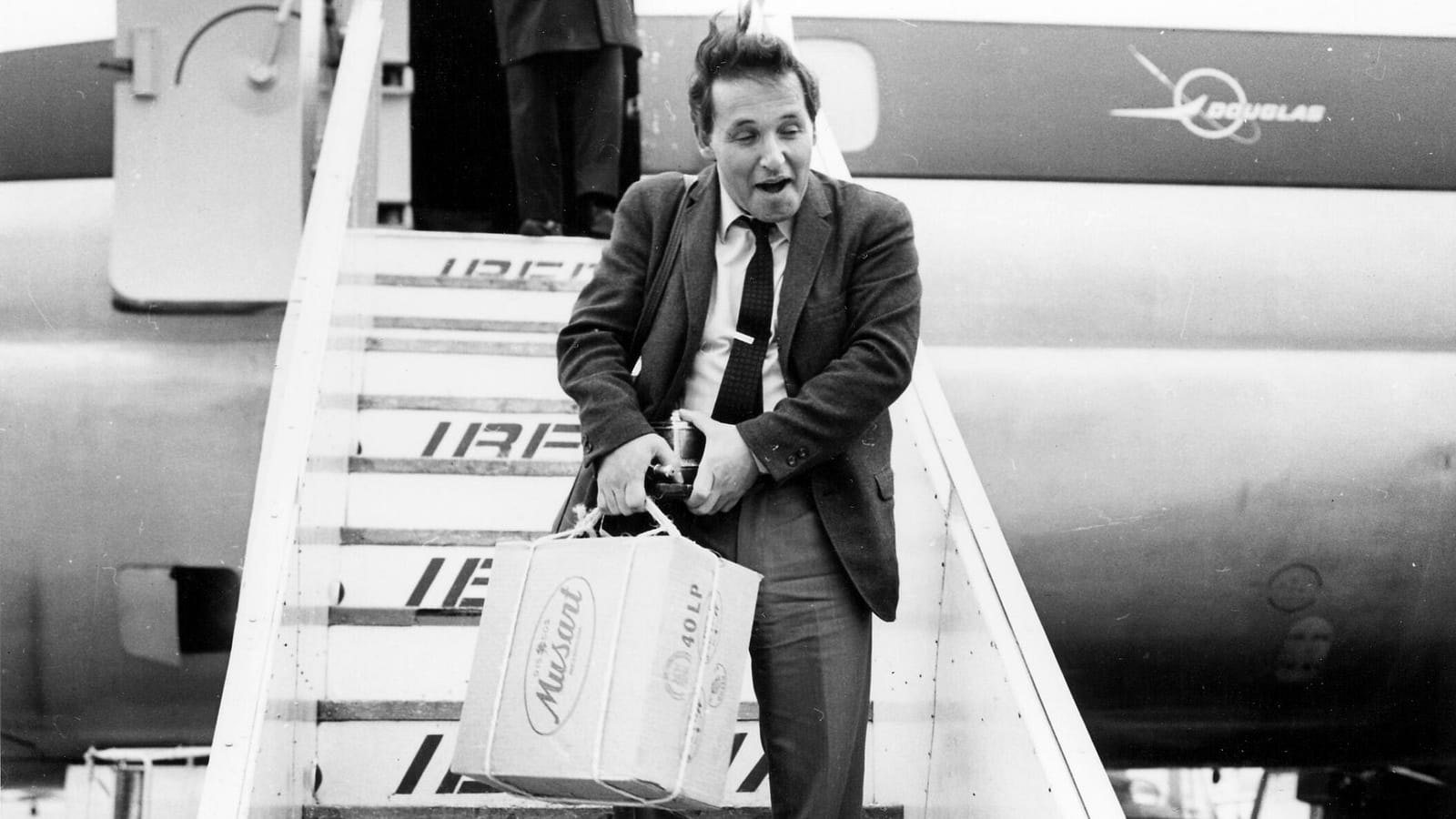
In Madrid, he was known simply as Torrebruno—a single word, pronounced with that Spanish accent that makes the “r” roll. An entire generation of Spanish children grew up watching him on television in the 1970s and 1980s, alongside the legendary clowns Gaby, Fofó, and Miliki, during TVE’s afternoon programming. Few of them knew that this cheerful man came from a town of just a few thousand souls on the Adriatic coast of Abruzzo.
Rocco Walter Torrebruno Orgini was born in Torino di Sangro on August 28, 1936. His family had always been from Torino di Sangro—Orgini is one of the town’s historic surnames. In the postwar years, like thousands of young people from the Abruzzo coast, he left the town: he studied, passed the civil service exam, and became a bank clerk in Rome.
A cruise, and everything changes
The story of his turning point is the kind that today seems like something out of a novel. On a Mediterranean cruise, Torrebruno sang for the guests and impressed the ship’s captain, who arranged an audition for him at a nightclub in Casablanca. There, he was discovered by a French talent scout, who took him to Paris: in 1956, Torrebruno was on stage at the Moulin Rouge, one of the most coveted showcases in European entertainment at the time.
When he returned to Italy in 1957, RAI hired him as the host of a music program. Italian television was in its infancy—it had only been around for three years—and it needed fresh faces.
The Two Times in Sanremo
Torrebruno participated twice in the Sanremo Festival, where he sang in duets with various performers. In 1962, he joined Gino Bramieri on the song “Pesca tu che pesco anch’io.” These appearances cemented his place in the Italian music scene of those years—a scene centered on light-hearted songs, catchy choruses, and dance hall vibes.
The Move to Madrid
In the 1960s, Italian singers were all the rage in Spain: Domenico Modugno, Mina, and Adriano Celentano filled the airwaves. Torrebruno sensed an opportunity: he moved to Madrid and signed a contract with Televisión Española. He began by appearing on variety shows like Noche del sábado and Gran Parada, then found his niche.
He found it in children’s programs. TVE, in those years, was building an afternoon lineup designed for the new generation of viewers—the children of Spain’s economic boom. It sought warm, Italian faces, with that simpatia mediterranea that works a treat on the little ones. Torrebruno was perfect: his good-natured demeanor, his warm voice, his softened yet recognizable Italian accent, and a natural ability to be with children without putting on airs.
For over two decades—from 1970 until nearly his passing—TVE aired almost no children’s programs without Torrebruno. He became part of the Spanish domestic imagination, alongside the clowns Gaby, Fofó, and Miliki.
TV Shows and Records
The list of TVE programs in which he was a regular or recurring guest is long:
- La Guagua — an afternoon children’s show
- El Recreo — family variety show
- 003 y Medio — a comedy show parodying James Bond
- La Locomotora — entertainment program
- Dabadabadá — a music show
- Hoy también es fiesta, Hola chicos, Sabadabada
- Saturday Night, Gran Parada (evening variety shows for adults)
He has released over 30 records in Italy and Spain—singles, EPs, and albums aimed at children and the general public. Dozens of hours of his appearances can still be viewed today in the archives of RTVE and the Madrid Conservation Office.
Awards and Recognitions
- Gold Record at the Mediterranean Song Festival
- Two appearances at the Sanremo Festival as a performer
- On the air regularly on TVE for over twenty years, a fixture in the children’s programming of Spain’s first public network
His connection to his hometown
Torrebruno never forgets Torino di Sangro. He returns to visit his family whenever he can; he participates, when asked, in town twinning events and Italian-Spanish cultural initiatives organized by the municipality. His albums always retain a Mediterranean sound: light-hearted songs, catchy choruses, and a touch of Adriatic melancholy.
The final years
He died in Madrid on June 12, 1998, after being hospitalized at the Clínica de Nuestra Señora de América due to a worsening heart condition. He was 61 years old. Spanish newspapers dedicated lengthy obituaries to him: ABC and El País remembered “the Turinese who came from the sea”—confusing, as often happened abroad, Torino di Sangro with the Piedmontese capital.
In Torino di Sangro, where a cousin still keeps a box of letters and photographs, the town remembers him as “Roccuccio.” It was his childhood name, before he became Torrebruno to the world.
Sources
- Wikipedia · Rocco Torrebruno
- Wikipedia (es) · Torrebruno
- El Café de la Historia · Torrebruno, life and biography
- IMDb · Torrebruno (filmography + TV shows)
- Find a Grave · Memorial
Voci della comunità
Sei il primo a lasciare un ricordo
Le storie del paese vivono nei dettagli che ognuno ricorda. Aneddoti, foto di famiglia, nomi dimenticati: tutto contribuisce a tenere viva la memoria.


Lascia il tuo ricordo