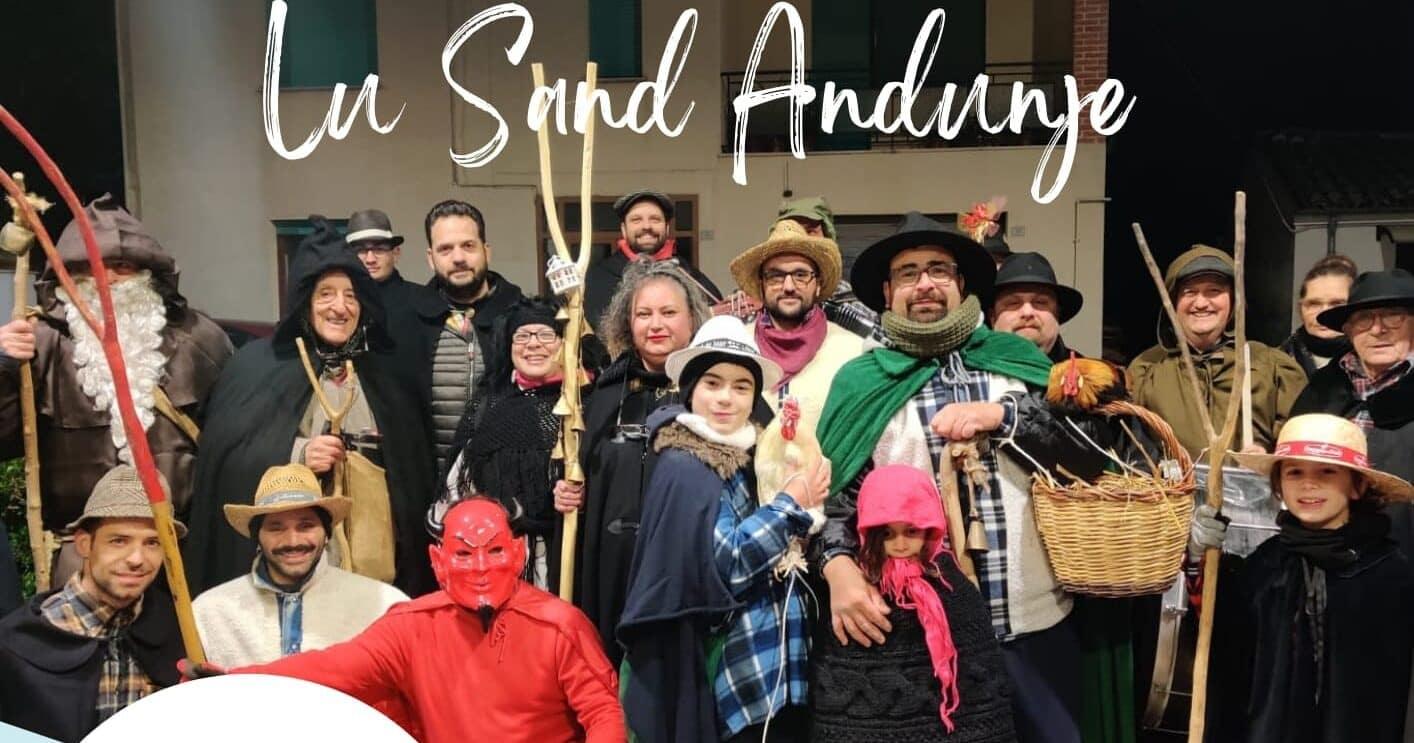
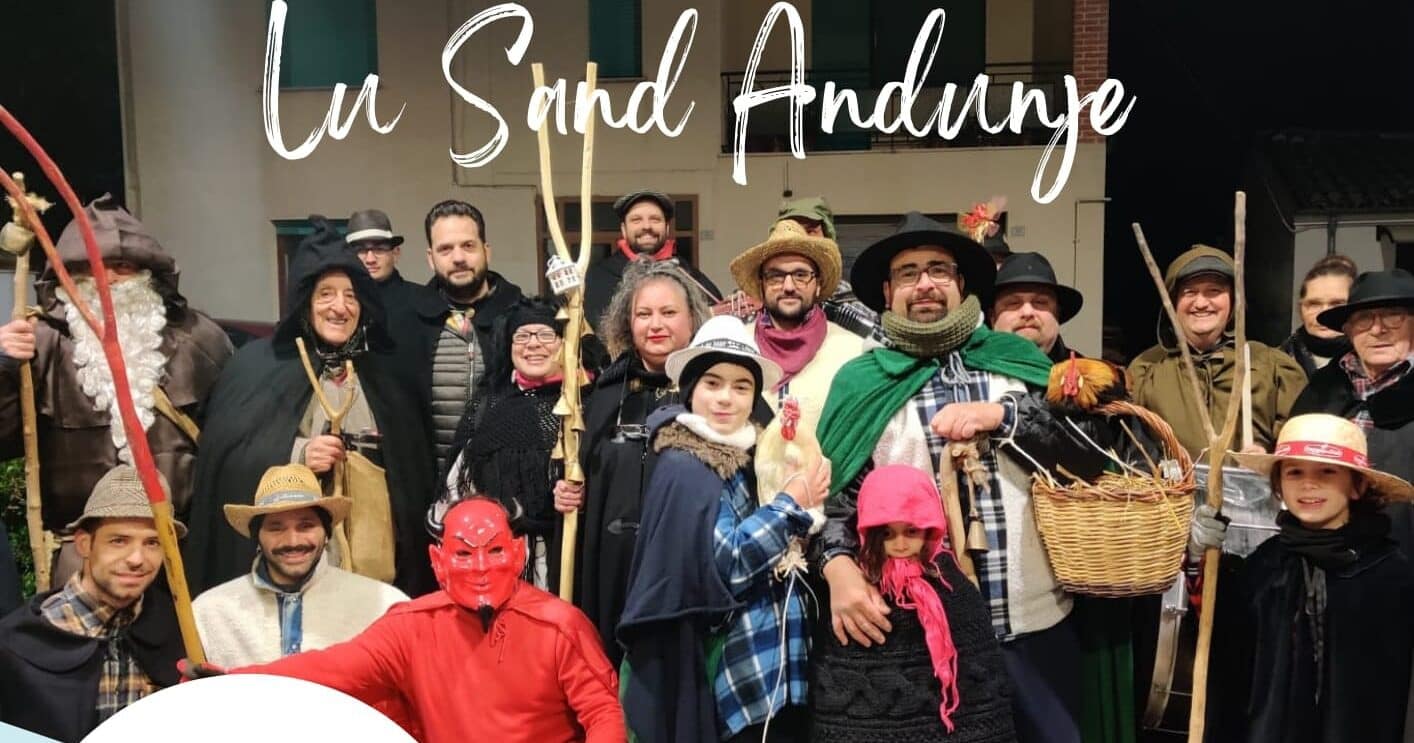
Late at night on January 17, bonfires are lit in many towns along the Sangro River. It is the feast day of Saint Anthony the Abbot, a 4th-century saint, an Egyptian hermit, and the first of the Christian monks. He is the patron saint of farmers, healers, those suffering from “holy fire” (medieval ergotism, now almost extinct)—and above all, of domestic animals.
The saint with the piglet
Saint Anthony the Abbot (251–356 AD) is always depicted in the same way: an old man with a white beard, a tau-shaped staff, a flame in his hand, and—at his feet—a piglet. That piglet isn’t just random folklore: in the Middle Ages, the Antonian Order—a hospitaller order that treated ergotism (known as “St. Anthony’s Fire”)—had the privilege of letting their pigs roam freely through the city streets, marked with a bell. Hence the saint’s connection to the pig, and by extension to all the domestic animals in the stable.
The fire: what does it mean
The bonfire of St. Anthony has origins far older than Christianity. It is a rite of passage for the winter solstice, adapted by the Church: in the heart of winter, when the days begin imperceptibly to lengthen, a fire is lit that serves three ritual functions:
- Purification — burning the brushwood of the old year to make room for the new.
- Protection — the smoke that spreads over the fields and barns “keeps away” livestock diseases.
- Gathering — the community gathers around the fire, eats, drinks, and tells stories. A social break from winter.
“Saint Anthony the Abbot / the farmer in love / with the piglet and the fire / bring us a little spring.” — a popular Abruzzese verse collected by Gennaro Finamore (1890).
The Blessing of the Animals
On January 17, in front of the church, farmers would bring (and in some towns still bring) their animals for the blessing: horses, donkeys, oxen, cows, sheep, chickens, dogs, and cats. The parish priest would sprinkle them with holy water. It was a deeply felt ritual because the farmer’s livelihood depended on the animals—losing them meant ruin.
Today the practice has changed: in many towns the blessing takes place on the Sunday closest to the 17th, and the animals are mainly dogs, cats, a few riding horses, and a few symbolic sheep. But the meaning remains: to pause from work to thank the creatures that make it possible.
Traditional Foods
The feast around the fire includes:
- Sausages and ventricina from the Vasto area roasted over the embers.
- Coppa and prosciutto — the pig takes center stage, in honor of the saint.
- Toasted homemade bread.
- New wine — this year’s red, still smooth.
- "Cicerchiate" — fried dough balls coated in honey, a typical January dessert.
In Torino di Sangro
The bonfire of Saint Anthony is one of those traditions that has dwindled but not died out. In some rural districts and neighborhoods of the town, groups of neighbors light the fire on the evening of January 16 (the “vigil”), gather around it with mulled wine and sausages, and carry on until midnight. No official program, no stage: it’s a neighborhood ritual, and that’s its strength.
Sources and Further Reading
- Gennaro Finamore, Tradizioni popolari abruzzesi, Loescher, Turin, 1890 (collection of songs and rituals).
- Treccani — Antonio Abate, saint
- Alfonso M. di Nola, Religious Anthropology, Vallecchi, Florence, 1976 (on winter fire rituals).
- Emiliano Giancristofaro, Il mangiarbene in Abruzzo, Carsa Edizioni, Pescara, 2007.
Voci della comunità
Sei il primo a lasciare un ricordo
Le storie del paese vivono nei dettagli che ognuno ricorda. Aneddoti, foto di famiglia, nomi dimenticati: tutto contribuisce a tenere viva la memoria.


Lascia il tuo ricordo