
Overhanging the sea like a giant spider, the trabocco is a wooden structure built on stilts driven into the seabed, with long arms (the “antennae”) from which a large square net is lowered. From Ortona to Vasto, along some sixty kilometers of coastline, about thirty examples still survive today, either still in use or restored. In the area of Torino di Sangro, one remains: the Trabocco di Punta Le Morge, built in 1918, rebuilt in 2011, and now managed by the "Lu Travocche" Association.

What it is and how it works
The trabocco is a passive fishing device: it doesn’t chase the fish, it waits for them. Here’s how it works:
- A wooden platform, a few square meters in size, built on oak piles driven into the seabed 30–50 meters from the shore.
- Two or more arms (long horizontal beams) extending out toward the sea, supported by tie rods.
- A manual winch, once operated by a wooden crank, now often powered by an electric motor to reduce the effort.
- A square net (the ritrecino), 8–12 meters on each side, which is lowered into the water and then snapped up when a school of fish passes over it.
The trabocchere—that is the fisherman’s name—stands atop the structure, scans the water, and when he spots the silhouette of the school, he activates the winch. The net rises rapidly, trapping mullet, grey mullet, mackerel, and sardines. It is fishing for the poor: low yield but consistent, done with little technology, within a family’s means.
“The trabocco is a wooden beast: it creaks, it groans, it dances with the waves. Fishing taught us patience even before the fish did.”
The origins: an ancient fishing method
The first written records of trabocchi date back to the 1700s, but the construction method is likely much older. The Abruzzese historian Pasquale Verlengia hypothesizes a medieval origin, derived from Adriatic lagoon fishing machines in the Venetian area. On the Abruzzo coast, the trabocco took root for specific reasons:
- Lack of natural harbors between Ortona and Vasto—fishing by boat was difficult.
- Shallow, sandy seabeds — ideal for driving in the poles.
- The presence of seasonal coastal schools of fish — easy to catch with a fixed net.
Dante himself mentions "trabocchetti" and similar devices in the Divine Comedy, albeit in a broader sense. Gabriele D'Annunzio, a native of Pescara in Abruzzo, dedicated memorable passages to the trabocchi in *The Triumph of Death* (1894), describing them as “stubborn machines, resembling colossal wooden spiders, upon which the fishermen lived in seclusion on the sea.”
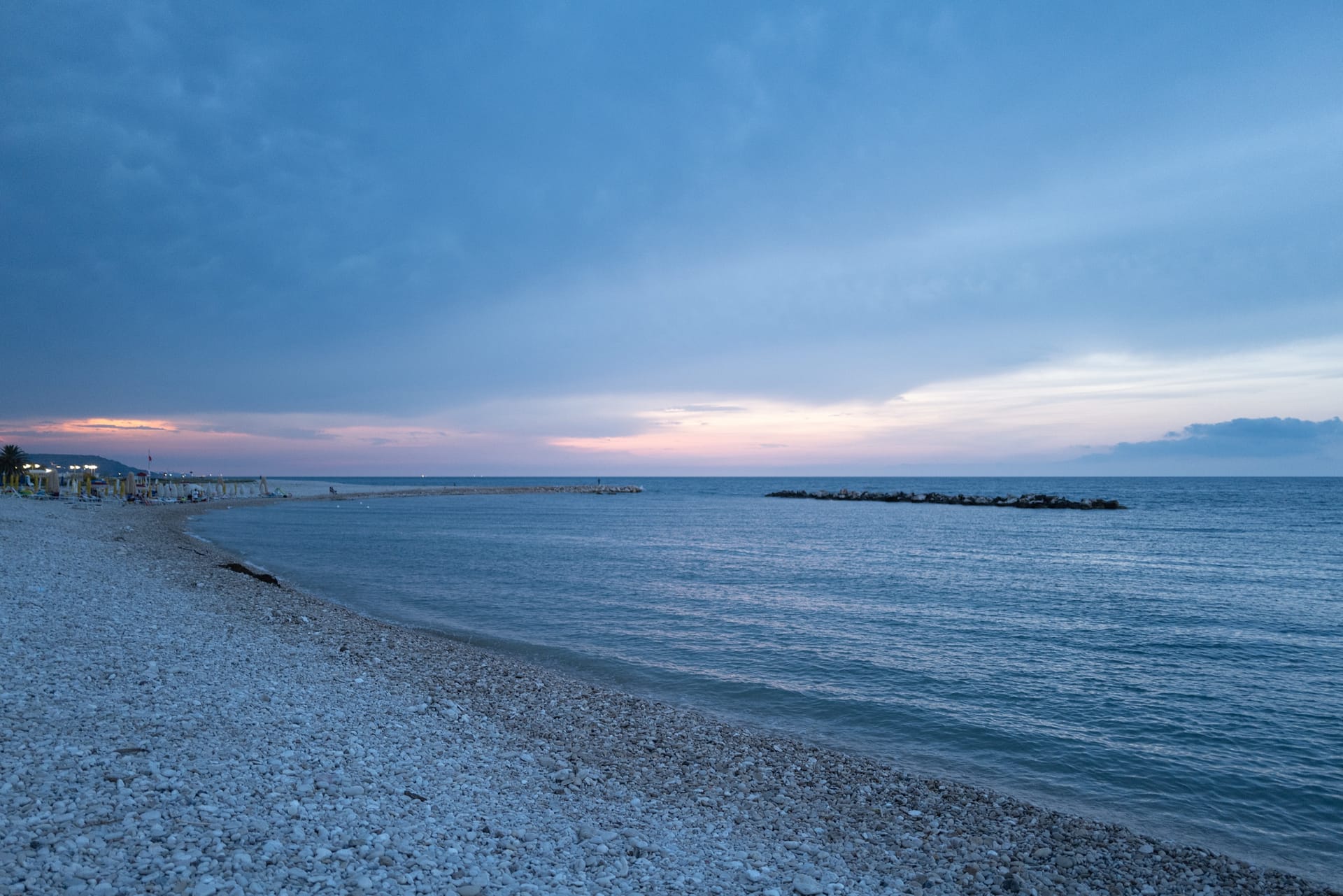
The trabocchi of Torino di Sangro
A few historic trabocchi survive on the coast of Torino di Sangro, including the Trabocco di Punta Le Morge, a symbol of the Turin section of the Costa dei Trabocchi.
They can be reached via the Via Verde dei Trabocchi, the bike path that follows the old Adriatic railway line decommissioned in 2005.
From Work to Heritage
In the 1960s and 1970s, fishing from the trabocchi became economically unsustainable: industrial fishing made the small catch from the trabocchi no longer profitable. Many trabocchi were abandoned; some collapsed due to storm surges.
The turning point came in the early 2000s, when the Associazione Trabocchi Costa Abruzzese and the Abruzzo Region launched a restoration and revitalization plan. Today, the trabocchi are protected historical monuments (landscape preservation under Ministerial Decree 1939), and many have been converted into traditional restaurants, where diners literally dine on the sea, on platforms that sway gently with the undertow.
Dining on a trabocco
Dining at a trabocco is an experience: a table just a few inches from the waves, low-slung (these are handcrafted structures, not industrial restaurant standards), and a menu of local seafood. Typical dishes:
- Brodetto alla vastese — fish soup with red mullet, scorpionfish, and tub gurnard.
- Spaghetti with clams.
- Mixed fried seafood of the day.
- Tollo white wine or Trebbiano d'Abruzzo.
Reservations must be made in advance (seats are limited, as the trabocchieri are small family-run businesses); you arrive on foot or by bike from the Via Verde, and you pay a small “premium” compared to a regular restaurant: you’re paying for the view, the experience, and the history.
Sources and further reading
- Gabriele D'Annunzio, Trionfo della morte, Treves, Milan, 1894.
- Pasquale Verlengia, History of Fishing in Abruzzo, Edizioni Meridiana, Lanciano, 1972.
- Trabocchi Association of the Abruzzo Coast
- Via Verde dei Trabocchi — information and map
- Ministerial Decree of October 21, 1939 — Landscape Protection on the Abruzzo Coast.
Voci della comunità
Sei il primo a lasciare un ricordo
Le storie del paese vivono nei dettagli che ognuno ricorda. Aneddoti, foto di famiglia, nomi dimenticati: tutto contribuisce a tenere viva la memoria.


Lascia il tuo ricordo